


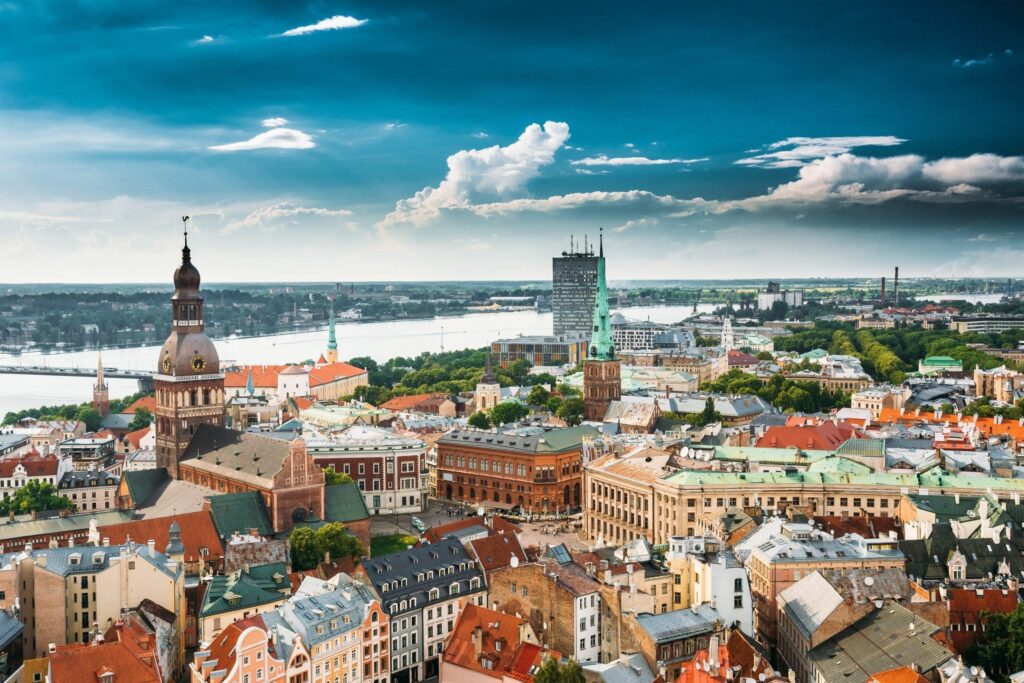
How to use this Riga travel guide
Riga is compact enough for a focused weekend, yet varied enough to reward a third day. The most useful plan is not a checklist of every landmark. It is a route that keeps nearby places together, leaves time for museums or food stops, and adjusts to daylight and weather. This guide is designed for a first visit of two or three days. It covers the historic centre, the early-twentieth-century city, the Central Market and the parks around the old defensive moat, then explains when an excursion outside Riga makes sense.
If you need a wider country overview, continue with the Latvia travel guide. It covers Jūrmala, Gauja National Park and longer Baltic routes. The page you are reading stays deliberately city-focused so that it does not replace the country guide, a bookable tour or a transport service.
Why Riga works for a short city break
Riga brings several different urban experiences into a manageable centre. The historic core is part of the UNESCO-listed Historic Centre of Riga and is best explored on foot. Across the canal, broad boulevards and parks open into neighbourhoods known for Art Nouveau architecture. The Central Market adds a working, everyday side of the city, while the Daugava riverfront gives the centre a clear sense of place.
Two days are enough for the principal districts without turning the visit into a race. Three days allow a slower museum programme, a seasonal activity or an excursion to Jūrmala or the Gauja area. Riga also fits naturally into a longer Baltic journey because it lies between Tallinn and Vilnius. That does not mean every traveller should cross three countries in one trip: the city deserves time of its own, especially when architecture, food, design or twentieth-century history are central interests.
Essential areas and sights to organise by location
Old Riga: begin around Town Hall Square and the House of the Black Heads, then continue through the lanes and squares near Riga Cathedral and St Peter’s Church. Opening hours, concerts and tower access can change, so choose one or two interiors rather than assuming that every building will be open.
The canal, parks and Freedom Monument: the green belt outside the Old Town makes an easy link between the historic streets, the Latvian National Opera area and the Freedom Monument. It also provides a quieter walking route when the central squares are busy.
Art Nouveau district: Alberta iela and nearby streets show the concentration of decorative façades for which Riga is known. Look beyond a single street: the wider central district also contains National Romantic and later architectural layers. A guided walk can help explain the symbols and social history instead of treating the buildings as a photo backdrop.
Central Market and riverfront: the market occupies a large complex close to the railway and bus stations. It is useful for understanding local produce and everyday food culture, but individual halls and stalls follow their own schedules. Combine the market with a walk along the Daugava rather than making a separate cross-city journey.
A realistic Riga itinerary for two or three days
Day one — the historic centre: start in Old Riga before the busiest part of the day. Link Town Hall Square, the cathedral quarter, the old guild streets and one chosen viewpoint or museum. Pause for lunch inside or beside the centre, then cross to the canal parks and Freedom Monument. An evening concert, performance or restaurant can be added only after the current programme and opening days are checked.
Day two — architecture, market and modern city: explore the Art Nouveau district in the morning, when attention is fresh enough for architectural detail. Continue through the boulevards toward the Central Market. Choose a museum that matches your interests rather than trying to visit several large collections. Finish at the riverfront or in a neighbourhood restaurant away from the main visitor route.
Day three — choose depth or distance: stay in Riga for the Latvian National Museum of Art, the Ethnographic Open-Air Museum or a slower neighbourhood day, depending on the season. Alternatively, travel to Jūrmala for the coast and resort architecture, or plan a longer excursion toward Sigulda and Gauja National Park. Do not combine both in one rushed day. Transport, attraction access and daylight should be checked for the exact date.
Travellers who prefer an organised programme can review the current tour catalogue. Published tour pages describe specific products; this guide remains independent planning information.
When to visit Riga and how the seasons change the plan
Late spring and summer provide long daylight, outdoor terraces and the broadest choice of walking routes. They can also bring busy weekends and variable weather, so a flexible indoor alternative is sensible. Early autumn often suits architecture, museums and parks, while late autumn requires more attention to rain, wind and shorter days.
Winter gives Riga a different scale. Museums, concert halls and cafés become more important, and December may bring seasonal events and markets. Snow is possible but should never be promised for a particular visit. In any cold-weather itinerary, allow more time between stops and verify outdoor attraction access. Public holidays and Mondays can affect museums throughout the year. Check the official site of each place shortly before travel rather than relying on an old opening-hours list.
Arrival, local transport and practical planning
Riga International Airport is the main air gateway. The best transfer choice depends on arrival time, luggage, group size and accommodation location. Public transport links the airport and city, while a pre-arranged private transfer may be more practical for a group, late arrival or a programme that continues outside central Riga. Timetables and ticket rules should be checked with the current operator.
The Old Town and central boulevards are walkable, but surfaces can be uneven and distances feel different in winter. Trams, buses and trolleybuses extend the practical range. A single day should be grouped geographically: repeated trips between the Old Town, Art Nouveau streets and distant museums waste time. For a multi-city group, private vehicle or complex land programme, the commercial DMC Latvia service explains how IBG Travel coordinates verified ground arrangements after dates and requirements are known.
Pack for changeable Baltic weather, confirm any mobility requirements before booking, and keep a realistic margin for airport or ferry connections. Restaurants, guides, vehicles and attraction access are only confirmed when they appear in a written booking or proposal.
Frequently asked questions about visiting Riga
Are two days enough for Riga?
Two full days are enough for the Old Town, canal parks, Art Nouveau district and a selected museum or market visit at a comfortable pace. A third day is useful for deeper cultural visits or one excursion outside the centre.
Should I stay in Riga or add Jūrmala?
Stay in Riga if this is a short first visit or if museums and architecture are the priority. Add Jūrmala when you have a third day and want a coastal contrast, after checking seasonal services.
Is Riga a good base for a Baltic itinerary?
Yes, geographically it works between Estonia and Lithuania. The route still needs realistic road or flight times, separate accommodation nights and current border, ferry or transport information.
Do I need a private guide?
Not for a simple walk, but a qualified guide can add context to architecture, history and local culture. The language, duration, route and access requirements should be confirmed in advance.
Turn the guide into a workable Riga trip
Share your dates, group size, interests and onward route if you want help turning these ideas into a private or professionally coordinated programme. IBG Travel confirms the actual services, availability and terms for the requested dates.